
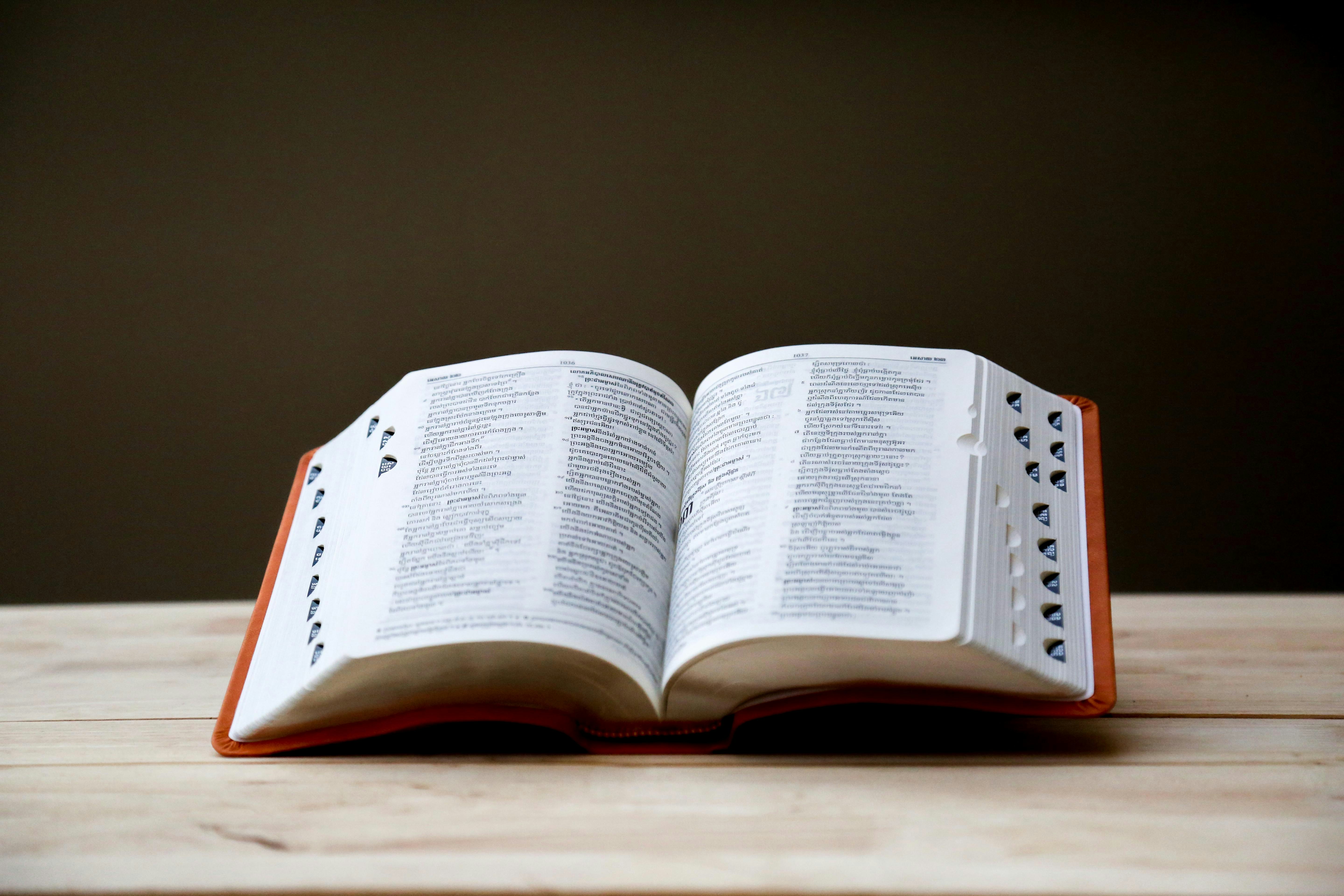
Dictionaries are the last word on language. They provide a definition, spelling and its variants, usage, etymology, pronunciation, and lots more. There’s one slight problem: They are slow to update. Why? Because a new word can take a supersonic flight around the globe while the dictionary is still lacing up its entries.
Some history
The very first dictionary that defined words in English was created by British writer and lexicographer Samuel Johnson in 1755. He and his staff of six worked in a dusty garret in London for nine years defining 40,000 words. His goal was to codify the language spoken by the upper class, i.e., his class.
This approach meant swear words and slang would be excluded because, Johnson’s reasoning went, high-class people wouldn’t and shouldn’t use such coarse, low-class words anyway. (For instance, he found leg too racy and substituted limb.) He reasoned—erroneously, it turns out—if a word wasn’t in the dictionary, people wouldn’t use it.
The next dictionary published in England 1879 was the Oxford English Dictionary, touted by Sir James Murray as a complete historical record of the language, including objectionable words. He shunned the idea that a dictionary should include solely correct usage. Instead, it should be a record of the language as it was being used. This was a new wrinkle in dictionary making: from prescriptivist Johnson to descriptivist Murray.
It took a minute to finish: James Murray aimed to complete a four-volume work in 10 years. But after a five-year slog gathering citations from as far back as the 12th century, Murray’s team had completed only A–Ant. Talk about mission creep. The completed dictionary appeared 49 years later in 1928. It consisted of 12 volumes and almost 415,000 lexical items. One hundred years later, OED’s citations have ballooned to 600,000+. (Stefan Fatsis says it may be as high as a million, depending on how one counts them.)
Updating new words
Noah Webster was the first to publish in the New World: An American Dictionary of the English Language in 1828. George and Charles Merriam purchased the rights to Webster’s dictionary after Webster’s death in 1843. Their first revised edition arrived in 1847 and is still available in print and online as Merriam-Webster’s Collegiate Dictionary.
Time marches on, and words do too. Merrian-Webster adds several hundred to a thousand new words a year to its online dictionary.
To qualify for acceptance, words and expressions must show they have appeared repeatedly, widely, and meaningfully across different contexts and media before being considered for inclusion. In 2023, Merriam-Webster added rizz, doomscroll, nepo baby, and touch grass. Language marches on, and dictionaries scramble to keep up.
Compiling a dictionary demands astounding effort and dedication. Lexicographers collect as many citations of a usage as possible. This informs a consensus of how people have used the word. If a word is borrowed, the dictionary traces its journey, including the point at which it entered English (Brohaugh also lists when words entered the language), along with any changes in meaning, spelling, and so forth. It’s the 23-and-Me of words.
Although removal of a word is unusual, dictionaries do retire those that fall into disuse (e.g., snollygoster, n. a shrewd, unprincipled person) and instead cite them as archaic or rare. Those words may be digitally archived to maintain a record. After all, each word is a nugget of our linguistic history. Lexicographers are loath to bury any of it.
Whither dictionaries?
Modern English dictionaries have evolved from judgmental gatekeeping (like Johnson’s) to become a living record of our language.
Regrettably, dark clouds are gathering over our beloved dictionaries. Fatsis points out they are now on the decline, with some now solely online to save on printing costs. Fatsis notes that dictionaries don’t always agree on what words are included, their pronunciation, or even their meaning. This trend feels unsettling, he says, because we expect dictionaries to be neutral arbiters. When they disagree, it exposes something people often forget: Dictionaries aren’t authorities that fix language; rather they are editors trying to keep up with our ever-changing word-stock.
Sources:
Arnold, W. R. (Writer), & Chakrabarti, M. (Host). (2025, December 12). The once and future dictionary [Audio podcast episode]. WBUR. https://bit.ly/4sGyR6k
Brohaugh, W. (1997). English through the ages. Writer’s Digest Books.
Crystal, D. (2019). The Cambridge encyclopedia of the English language (3rd ed.). Cambridge.
Fatsis, S. (2025). Unabridged: The thrill of (and threat to) the modern dictionary. Atlantic Monthly Press.
Gonyea, D. (Host), & Fatsis, S. (Guest). (2025, October 19). In ‘Unabridged,’ Stefan Fatsis discusses the past—and future—of the dictionary [Radio broadcast episode]. In Weekend Edition Sunday. NPR. https://www.npr.org/search/?query=stefan%20fats&page=1
Hitchins, H. (2005). Dr. Johnson’s dictionary: The book that defined the world. Cambridge.
Landau, S. (2001). Dictionaries: The art & craft of lexicography (2nd ed.). Scribner.
Menand, L. (2025, December 29 & 2026, January 5). Look it up. The New Yorker, 59-64.
Merriam-Webster’s collegiate dictionary (12th ed.). (2025). Merriam-Webster.
Merriam-Webster.com dictionary. (n.d.). Merriam-Webster.
Oxford English dictionary. (n.d.). Oxford University Press.
Winchester, S. (1998). The professor and the madman: A tale of murder, insanity, and the making of the Oxford English dictionary. Harper Perennial.
Leave a Reply